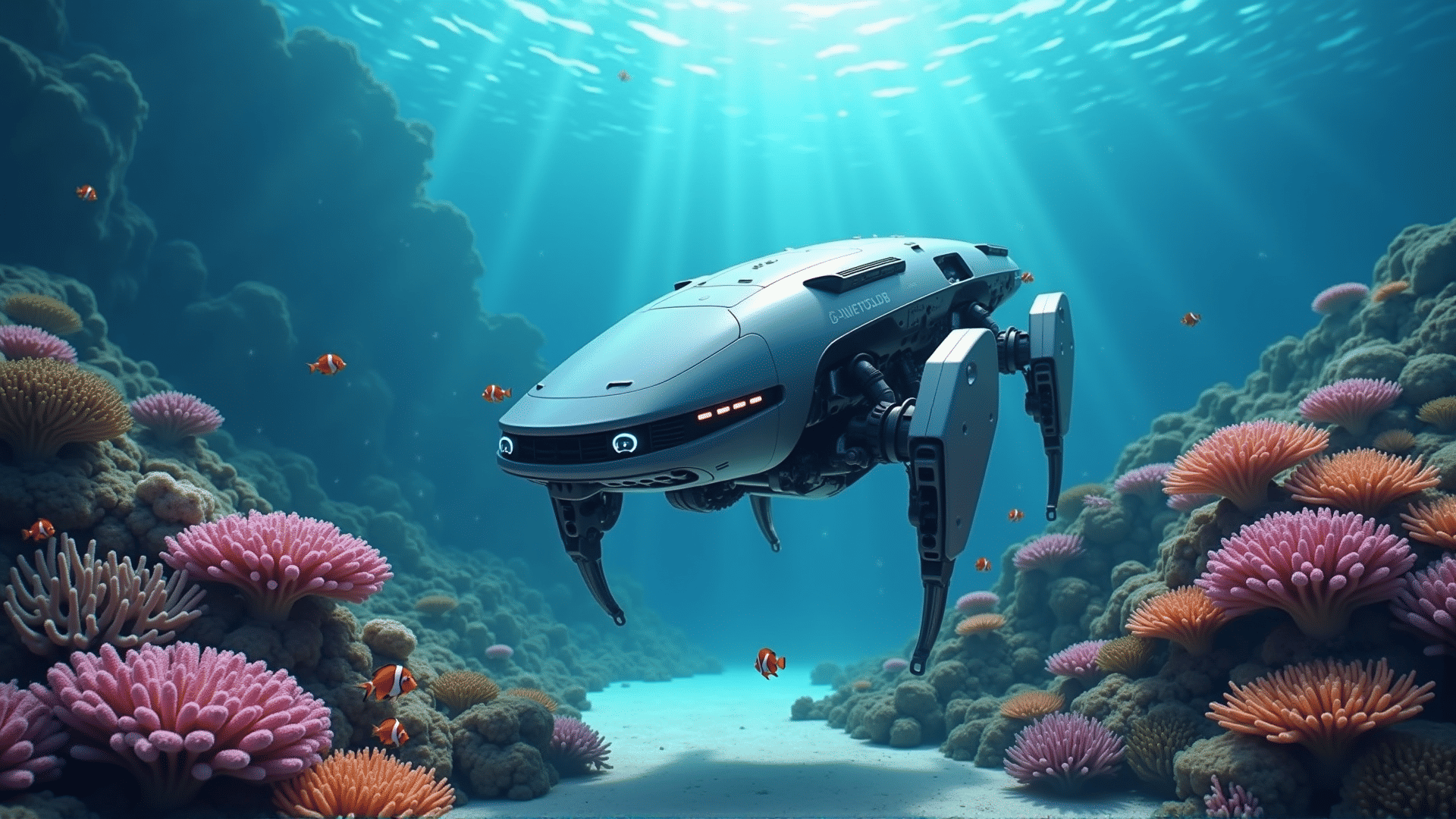
The unyielding allure of the ocean has driven humanity to push the boundaries of exploration, sparking innovations that enable us to delve deeper and uncover the mysteries hidden beneath the waves. Today, the field of advanced marine technology is brimming with cutting-edge advancements that promise to transform our understanding of the deep sea.
One of the most significant breakthroughs comes in the form of autonomous underwater vehicles (AUVs). Unlike their manned counterparts, AUVs can endure the crushing pressure and frigid temperatures of the deep sea for extended periods. Equipped with sophisticated sensors and high-resolution sonar systems, these robotic vehicles map the ocean floor with unprecedented accuracy, capturing minute details that were previously obscured. Enhanced propulsion systems enable AUVs to navigate the ocean's labyrinthine topography with precision, allowing scientists to study ecosystems in their natural state without interference.
In tandem with AUVs, remotely operated vehicles (ROVs) are seeing remarkable improvements. These tethered submersibles now boast enhanced control systems, providing researchers with the ability to conduct intricate tasks such as sampling hydrothermal vent emissions or recovering delicate coral specimens with surgical precision. Advances in material science have also led to the development of lighter, more durable ROV frames capable of operating at greater depths than ever before.
Innovations in sensor technology further bolster the capabilities of these exploratory tools. Modern oceanographic sensors are now able to detect minute variations in water chemistry, offering insights into the ocean's role in global climate regulation. Miniaturized, energy-efficient sensors allow scientists to deploy them in large numbers across vast areas, creating a comprehensive network that monitors changes in real-time. This rich data stream enhances our understanding of ocean currents, temperature fluctuations, and the intricate web of life thriving in the deep.
The deployment of cutting-edge communication technologies is overcoming the longstanding challenge of data transmission from beneath the waves. High-frequency acoustic modems and fiber-optic cables now facilitate high-speed data relays, bridging the gap between underwater instruments and surface stations. This connectivity ensures that insights from the deep are delivered to scientists in real-time, enabling timely analysis and decision-making.
Moreover, the integration of artificial intelligence (AI) is revolutionizing how we process and interpret the ocean of data generated by these technologies. AI algorithms are adept at identifying patterns and anomalies within vast datasets, aiding in the prediction of natural phenomena such as marine heatwaves and aiding conservation efforts. Machine learning techniques allow for continuous refinement of exploration strategies, ensuring that missions are adaptive and resource-efficient.
As we stand on the brink of an era defined by deep-sea exploration, the promise of advanced marine technology shines brightly. By synergizing robotics, sensor technology, and artificial intelligence, we are now equipped with the tools to unlock the ocean's enigmas. With each dive, we illuminate the unknown, uncovering wonders that inspire innovation and fostering a deeper appreciation for the blue heart of our planet. In doing so, we take steps toward safeguarding the health of the oceans for future generations, ensuring that the mysteries beneath the waves continue to captivate and sustain us.