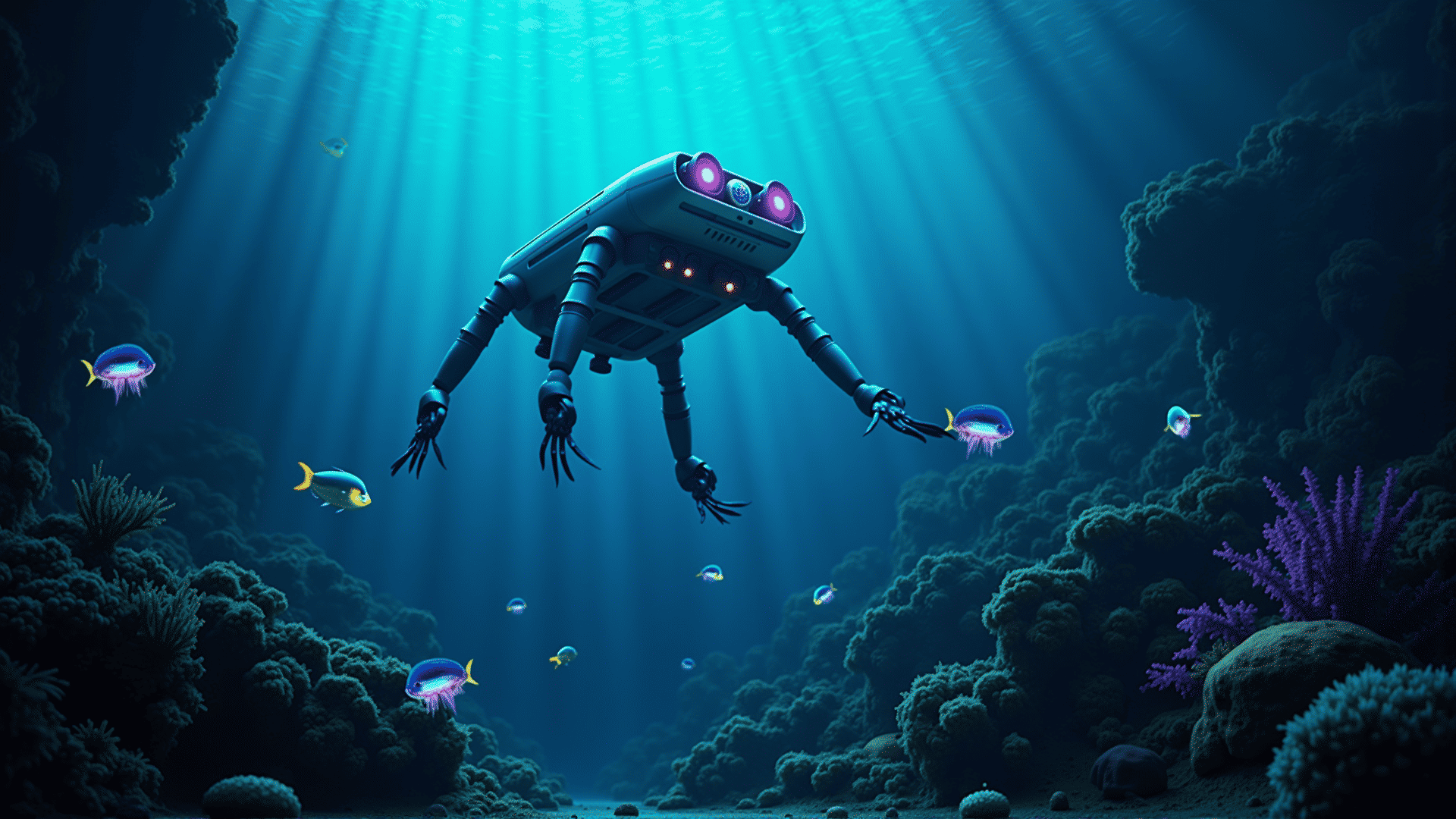
The deep sea, a realm cloaked in darkness and mystery, has long captured human imagination. As our planet's final frontier, its secrets are slowly being unveiled, thanks to a synergy of advanced technologies and human curiosity. From enigmatic sea creatures to otherworldly habitats, the deep ocean offers insights not only into marine biodiversity but also into the very origins of life on Earth.
The exploration of these uncharted waters has undergone a transformative era powered by technological innovations. Autonomous underwater vehicles (AUVs) and remotely operated vehicles (ROVs) have made it possible to venture deep below the ocean's surface, reaching areas once deemed inaccessible. These robotic explorers are equipped with high-definition cameras, sonars, and sensors that relay detailed data back to scientists in real-time, providing a virtual presence in extreme environments.
Bioluminescent creatures emerge from the shadows as AUVs descend into the abyss. Among them, the anglerfish, with its iconic luminescent lure, showcases nature's ingenuity in adapting to the perpetual darkness. Such adaptations spur crucial questions about evolutionary processes and the resilience of life in harsh conditions. Technologies like environmental DNA (eDNA) sequencing are aiding in cataloging these species, revealing a spectrum of life forms previously unknown to science.
Among the technological advancements, high-resolution imaging has played a pivotal role in understanding deep-sea topography. Multi-beam echosounders create detailed maps of the ocean floor at unprecedented precision, uncovering underwater mountains, valleys, and plains. These mappings not only aid navigation but also inform geological studies that could hold the secrets to tectonic movements and an understanding of Earth's ancient history.
Submarine hydrothermal vents present some of the most enigmatic deep-sea habitats. Known as "black smokers," these vents support unique ecosystems thriving on chemical energy rather than sunlight. Discoveries of microorganisms within these extreme environments hint at the possibility of life existing in similar conditions elsewhere in our solar system, such as on Jupiter's moon Europa or Saturn's moon Enceladus.
Furthermore, deep-sea exploration has prompted considerations about sustainable ocean practices. The enthusiasm to mine the deep for minerals, spurred by the growing demand for elements like cobalt, nickel, and rare earth metals vital in technology manufacturing, is tempered by the need to preserve delicate ecosystems. International bodies are engaging in discussions to balance industrial interests with ecological preservation to ensure that human activities do not irreparably damage these largely unseen worlds.
The ocean's depths have inspired interdisciplinary collaborations, combining expertise from marine biology, oceanography, environmental science, and engineering. Citizen science initiatives are increasingly empowering people to participate in data collection and analysis, democratizing the exploration of our oceans and building a broader understanding of marine environments among the public.
In the quest to unlock the mysteries of the deep sea, we are reminded of the ocean's significant role as a climate regulator and biodiversity reservoir. While only a fraction of the seafloor has been explored, each mission underwater brings us closer to understanding the vast, interwoven tapestry of life that thrives beneath the waves. As we continue to advance our technological capabilities, a treasure trove of knowledge awaits, promising to illuminate not only the complexities of marine ecosystems but also the fundamental questions of our existence.